Did You Miss Today's U.S. Chamber Small Business Forum?
Here's What Caught My Attention!

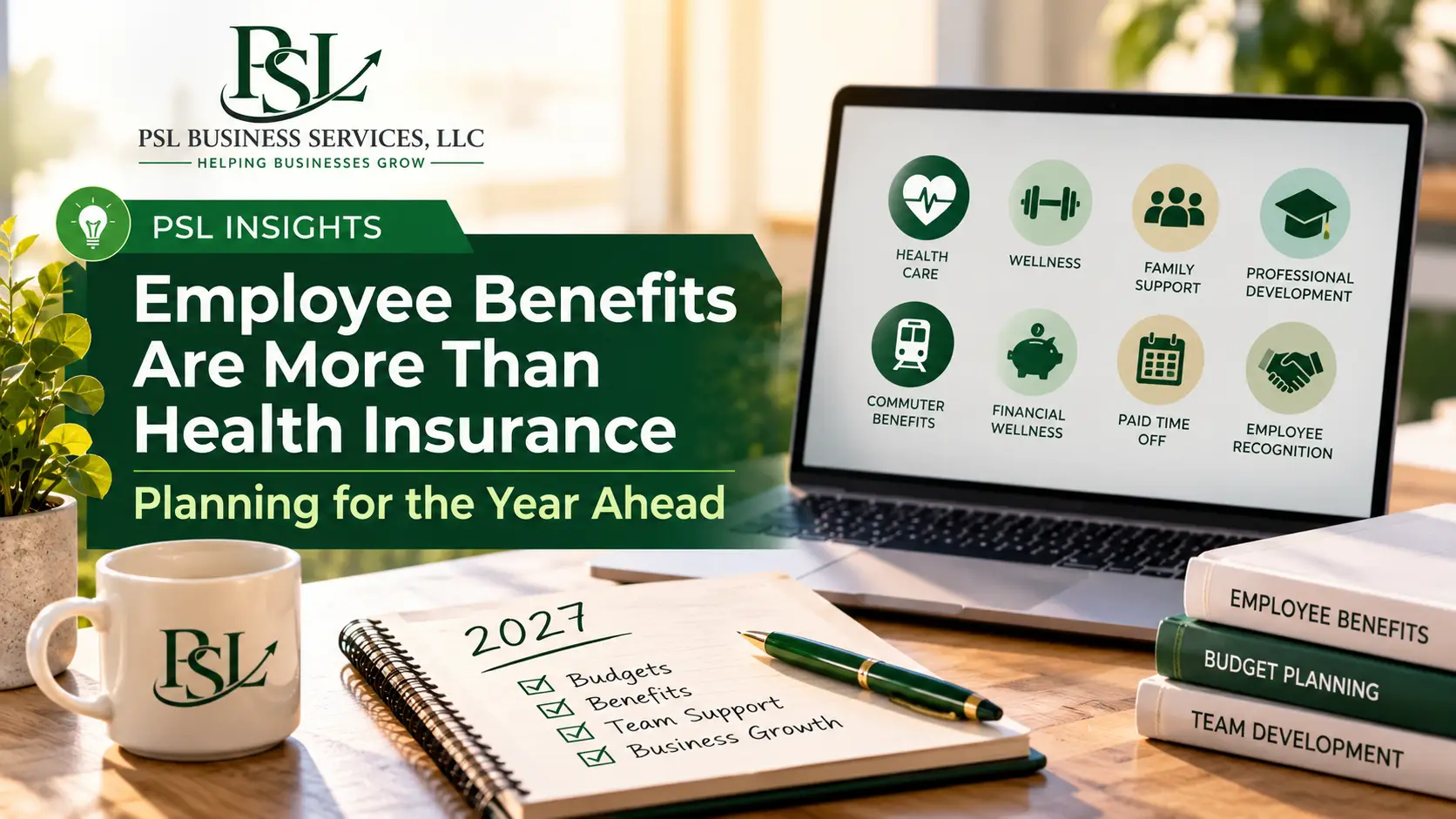
PSL Business Services — Employee Benefits Beyond Health Insurance, 2027 Planning

Published October 29, 2026

As the year draws to a close, year-end employee benefits planning becomes an important part of reviewing budgets, preparing for employee benefit elections, and setting business priorities for 2027.

Health insurance often dominates these conversations, but a meaningful employee benefits package goes well beyond medical coverage.

From flexible schedules and professional development to commuter assistance and employee recognition, some of the most valuable benefits aren’t necessarily the most expensive.

Year-end planning is the perfect opportunity to rethink how we support the people who help our businesses succeed.


During the recent U.S. Chamber of Commerce Small Business Forum, one discussion particularly caught my attention: the importance of looking beyond traditional health insurance when developing employee benefits.

The conversation highlighted how practical offerings, including public transportation passes, parking assistance, and other everyday benefits, can make a meaningful difference to employees.

It was a timely reminder that as businesses prepare for the new year, employee benefits deserve a place in the broader conversation about budgets, retention, and business growth.


1. Flexibility: A Benefit That Doesn't Always Require a Bigger Budget

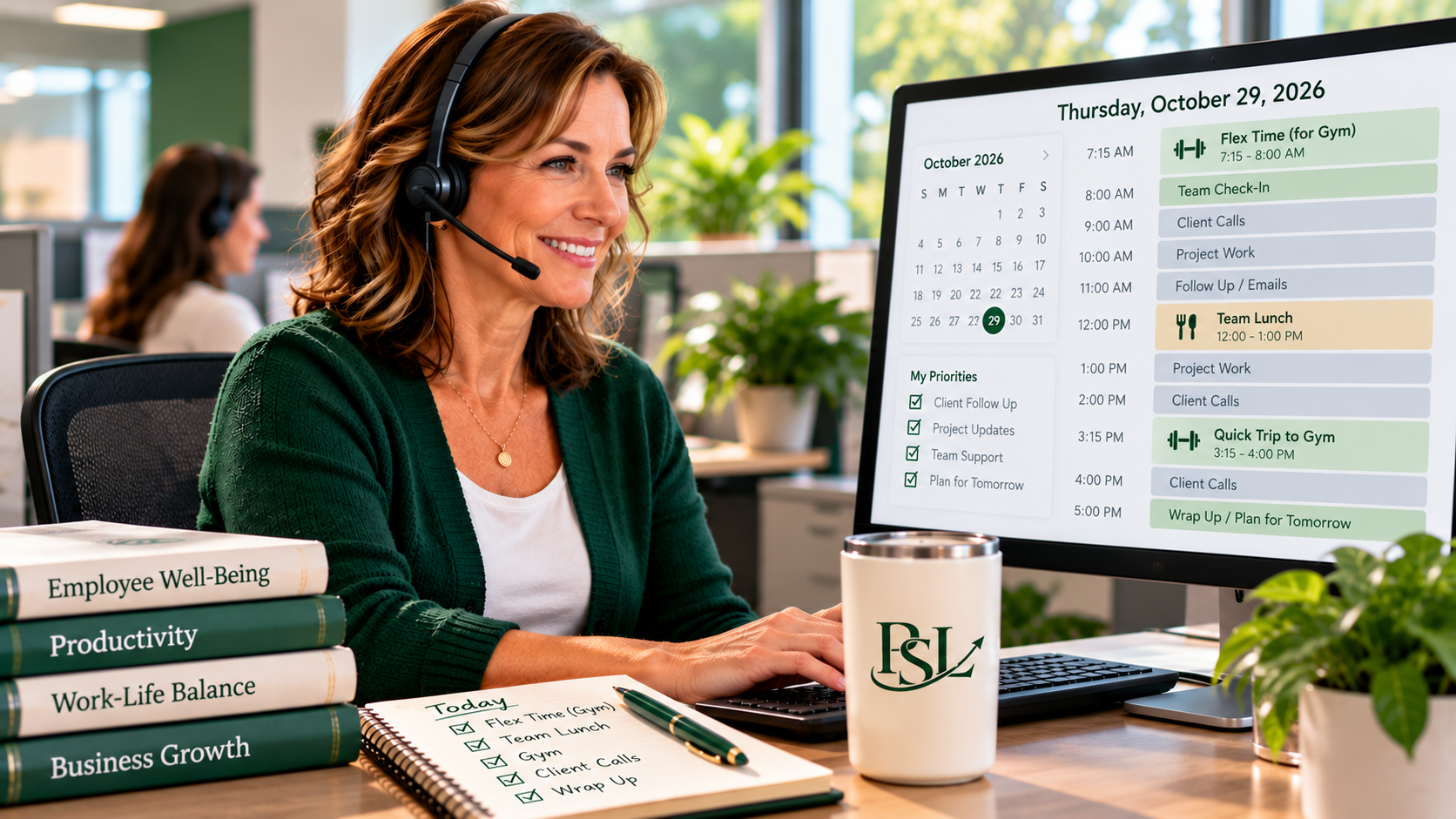
Flexible work schedule with team lunch, gym time and client calls

As businesses plan staffing and operational schedules for the new year, flexibility is worth considering as part of the employee benefits conversation.

Depending on the nature of the business, flexible working hours, occasional remote work, or more predictable schedules can make a meaningful difference.

For a working parent, that might mean adjusting hours around school commitments. For another employee, it could mean having the flexibility to attend appointments or manage personal responsibilities.

Small adjustments can improve the employee experience without necessarily increasing payroll costs or compromising customer service.

Sometimes, flexibility is one of the most valuable benefits a business can offer.


2. Professional Development: Budgeting for Growth

Introducing 2027 employee benefits, including professional development, flexibility, wellness and financial benefits

Investing in employee development doesn’t necessarily mean paying for expensive training programs or conferences.

As businesses establish their budgets for the new year, even a modest allowance for professional development can create opportunities for employees to strengthen their skills and take on new responsibilities.

Online courses, industry webinars, mentoring, cross-training, and professional certifications are all worth considering. Many excellent learning opportunities are available at little or no cost.

Encouraging employees to expand their knowledge can improve confidence, strengthen internal operations, and help businesses develop future leaders.

When employees grow professionally, the business benefits too.


3. Recognition and Appreciation: Small Gestures, Lasting Impact

Small business team recognizing an employee's contributions and celebrating workplace achievements

Employee recognition is often overlooked when businesses evaluate their benefits packages, yet feeling appreciated can be just as meaningful as a financial reward.

A sincere thank-you, recognition during a team meeting, or acknowledging an employee’s contribution to a successful project can strengthen morale and encourage continued engagement.

As businesses prepare for the new year, consider incorporating simple recognition initiatives into the workplace. Employee appreciation lunches, milestone celebrations, handwritten notes, or small rewards can help create a culture where contributions are genuinely valued.

Recognition doesn’t need to be elaborate or expensive. What matters most is that it is thoughtful, consistent, and sincere.

Employees who feel valued are more likely to feel connected to the business and its success.


4. Wellness: Looking Beyond Medical Insurance.

Employees participating in a workplace wellness activity promoting physical health, stress management and team well-being

Employee wellness extends well beyond traditional health insurance. As businesses prepare their benefit offerings for the new year, it’s worth considering how everyday workplace practices can contribute to employees’ physical and emotional well-being.

Encouraging regular breaks, providing flexibility for medical appointments, and maintaining manageable workloads can help employees balance professional responsibilities with personal health.

Small initiatives such as walking groups, healthy snacks, wellness challenges, or partnerships with local fitness facilities can encourage healthier habits without requiring a substantial investment.

Businesses may also explore employee assistance programs (EAPs), mental health resources, or educational workshops focused on stress management and overall wellness.

A workplace that supports employee well-being can build a healthier, more engaged, and more productive team.

5. Financial and Lifestyle Benefits: Thinking Beyond the Paycheck

As businesses review their budgets and employee benefits for 2027, financial and lifestyle benefits deserve attention alongside traditional health insurance.

Some of the most appreciated benefits help employees manage everyday expenses, plan for the future, or simply enjoy greater financial security.

Transportation and Commuting Assistance

Public transportation passes, commuter rail subsidies, paid parking, and fuel allowances can help offset the cost of getting to work. For employees who commute regularly, even modest assistance can make a noticeable difference in their monthly expenses.

Employers should review applicable tax rules when structuring these benefits, as certain transit and parking programs may qualify for favorable tax treatment, while ordinary fuel allowances generally do not.

Retirement and Financial Growth

Retirement savings programs, employer 401(k) contributions, profit-sharing arrangements, and financial education can help employees build long-term security while reinforcing their connection to the business.

Everyday Financial and Lifestyle Support

Paid time off, employee discounts, educational assistance, and access to financial planning resources are additional options worth considering.

The goal isn’t necessarily to offer more benefits, but to offer benefits that genuinely improve employees’ lives.


6. Before Finalizing Your Budget, Ask Your Employees

Before committing to new benefits or increasing existing expenditures, take time to ask employees what matters most to them.

A short employee survey, informal team discussion, or individual conversation can reveal priorities that management might otherwise overlook.

One employee may value additional paid time off, while another would appreciate help with commuting expenses. Others might prioritize professional development, retirement contributions, or more flexible schedules.

Consider asking three simple questions:

  • Which of our current benefits do you value most?
  • What additional benefit would make the greatest difference in your daily life?
  • What could we improve without significantly increasing costs?

Employee feedback can help businesses prioritize spending, avoid investing in underused programs, and develop benefits that genuinely support their teams.

The most effective benefits strategy starts by listening to the people it’s intended to support.


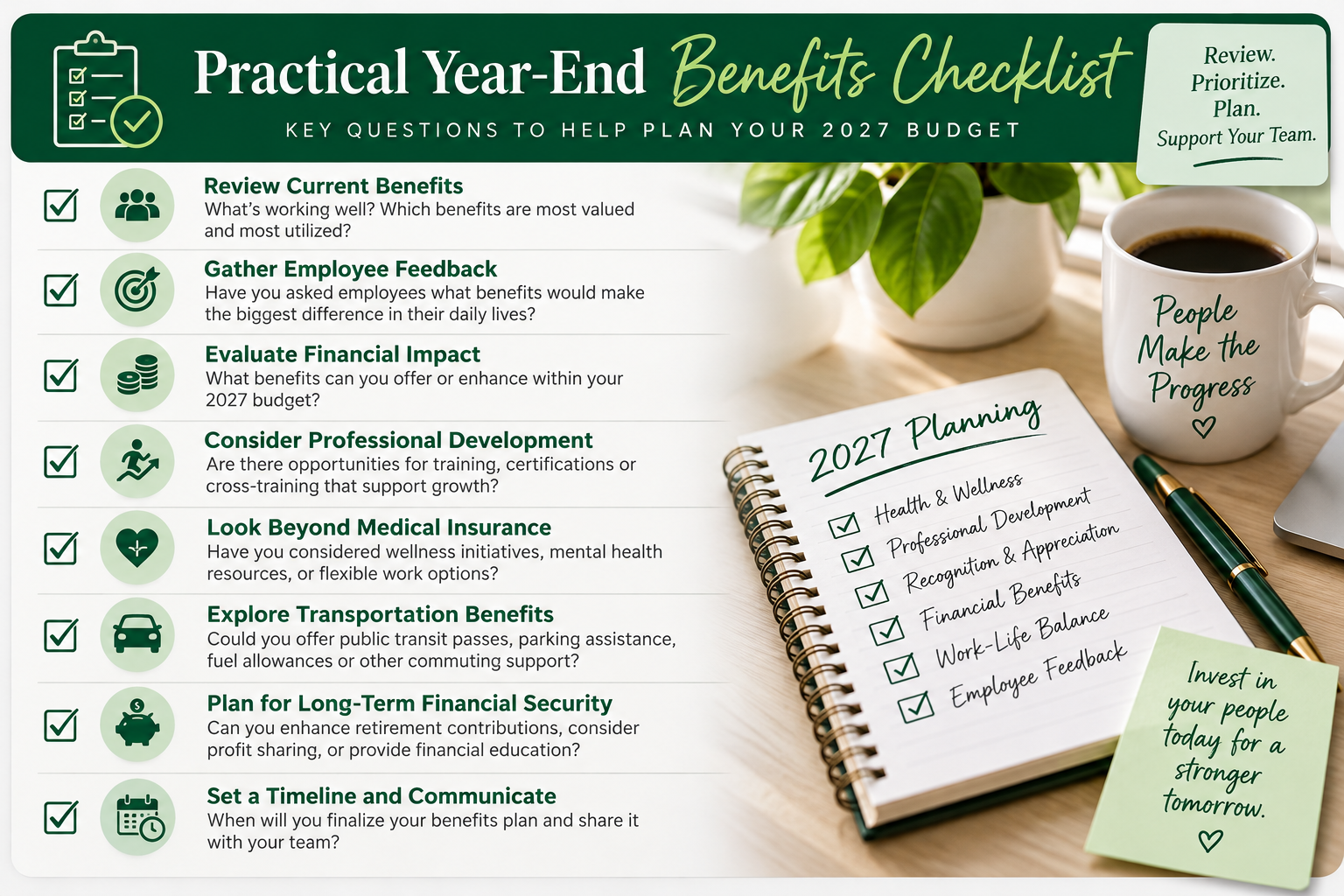
Practical year-end employee benefits checklist for small businesses planning their 2027 budgets

Employee benefits are more than an expense on the annual budget. They’re an investment in the people who contribute to a business’s success.

A thoughtful benefits package can help attract qualified employees, improve retention, and strengthen workplace morale. When experienced employees stay, businesses also retain valuable knowledge, established customer relationships, and operational consistency.

For small businesses, the goal isn’t necessarily to compete with the extensive benefits packages offered by large corporations. It’s to identify meaningful opportunities that reflect the needs of employees while remaining financially sustainable.

As you finalize your 2027 business plans, consider how your employee benefits strategy supports your broader goals for growth, productivity, and long-term success.

Supporting your employees and growing your business don’t have to be competing priorities. The right approach can accomplish both.


Looking Ahead

As we approach the end of the year, it’s a good time to look beyond the numbers and consider the people behind our businesses.

Building a meaningful employee benefits package doesn’t always require a substantial investment. Sometimes, the most valuable improvements come from listening, recognizing individual needs, and making thoughtful adjustments to existing programs.

Whether you’re reviewing health insurance, introducing flexible schedules, exploring transportation assistance, or investing in professional development, every improvement is an opportunity to strengthen your team.

As you plan for 2027, remember that investing in your people is also investing in the future of your business.

Reevaluate. Refocus. Regroup. Grow.

Note: This article provides general business information and is not intended as legal, tax, insurance, or financial advice. Employers should consult qualified professionals regarding benefit programs and applicable regulations.


About PSL Business Services

Established in 2002, PSL Business Services, LLC helps businesses grow through business development, CRM and sales analytics, marketing design and branding, corporate event and travel planning, and professional business support.

Helping Businesses Grow.

Explore how we can support your business: Discover PSL Business Services

Editor’s Note: This article was inspired in part by discussions at the U.S. Chamber of Commerce Small Business Forum on October 21, 2026. The observations and recommendations are independently presented by PSL Business Services and do not represent an official U.S. Chamber publication.